Creating transparent tables
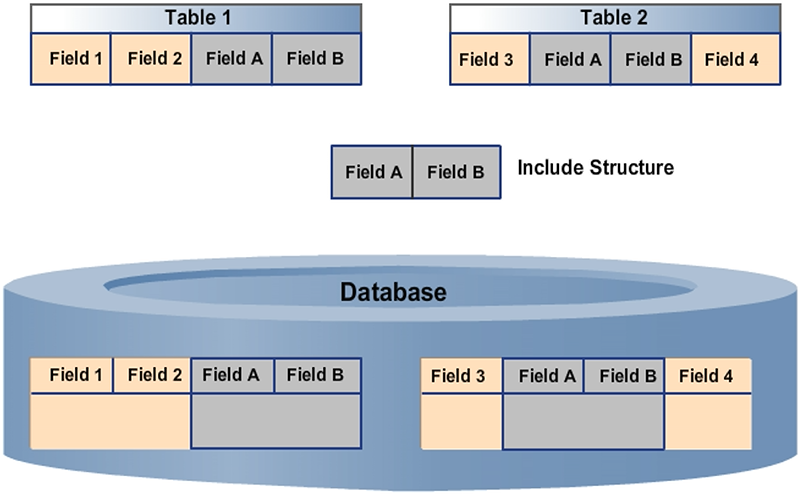
INCLUDE Structures
The include mechanism exists to avoid redundant structure definitions. You can re-use structures by including them in other structures or tables.
A table cannot be included in another table.
Includes may contain other includes.
Foreign keys defined in the INCLUDE structure are passed on to the including table.
Technical Settings for Transparent Tables
The technical settings determine the storage requirements and the access behavior of database tables. When you activate the table in the ABAP Dictionary, the system automatically creates the table in the database system. The technical settings define how the table is handled when it is created in the database system. The settings for the data class and size category determine the storage area to be selected and the expected table size. The settings for buffering define whether and how the table should be buffered. You can define whether changes to the table entries should be logged.
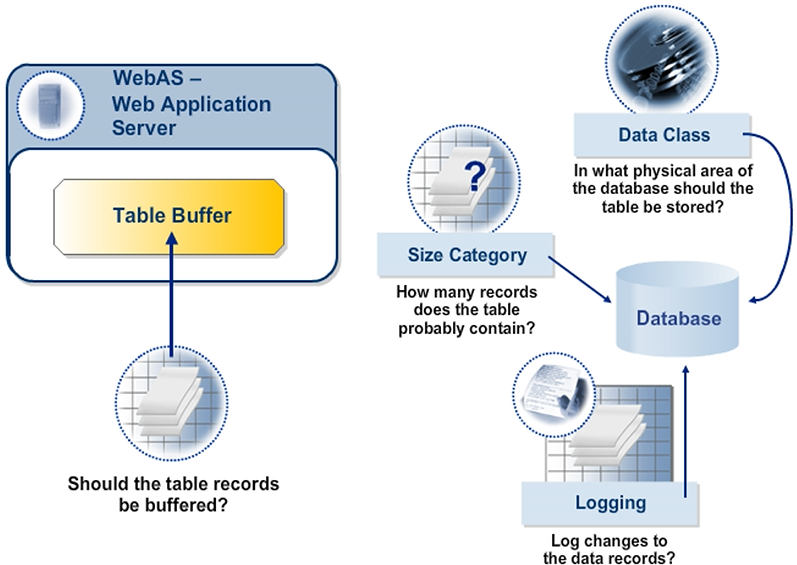
Table Fragmentation in the Database
Tables that include transaction data can have large gaps in their allocated space due to fast growth or frequent data record changes, such as inserting or deleting the data records. This data fragmentation on the database server always leads to potential performance problems. Indexes can also be fragmented due to frequent or mass data record changes. Regular database maintenance and reorganization can help to solve some of these issues and this is usually handled by the system or database administrators.
Note: Tablespace is a term used by Oracle. It is a storage area in the database.
Fragmented indexes can be defragmented by rebuilding with indexes. The database calculates the content and structure of the index again and creates the necessary space in one piece in the storage medium. While the index is being re-created by the database system, ABAP programs can still access the table content
To reduce the fragmentation of database tables, one of the possible solutions is to rebuild the tables. During the rebuild process, the SAP system creates a new table and transfers the data to this table. Afterwards the system deletes the old, fragmented table and replaces it with the new one.
Data Class
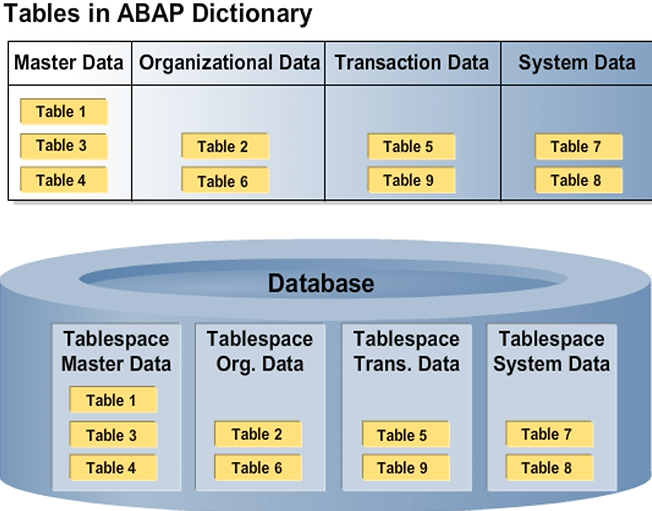
The database system has different physical storage areas. The data class defines where the table resides within the database system.
Tablespace is a term used in the Oracle database.
The most important data classes are as follows:
- Master data
Master data is data that is seldom modified. An example of master data is the customer master data, which includes customer name, company address, and company details. - Transaction data
Transaction data is the data that is frequently modified. An example is the material stock of a warehouse, which can change after each purchase order. - Organizational data
Organizational data is the data you can define when you customize and install the system, and is seldom modified afterwards. The country keys are an example. - System data
System data is the data that the SAP system needs. The system configurations are an example.
Size Category
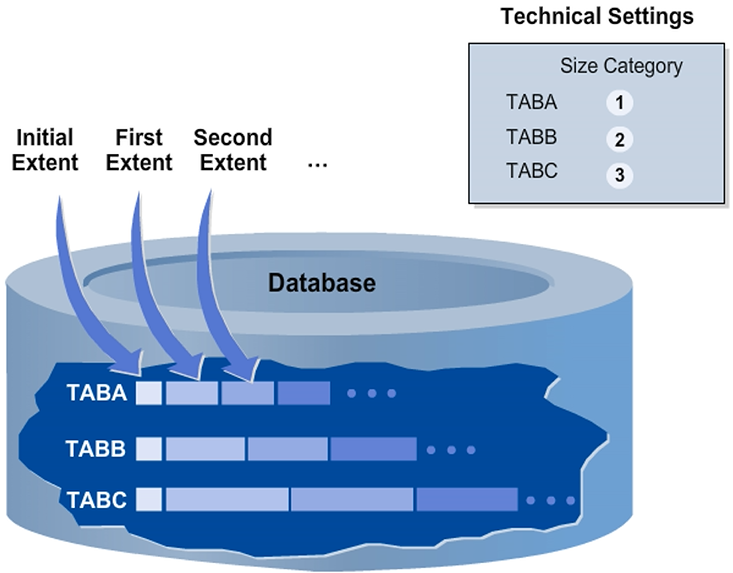
The size category describes the expected storage requirements for the table in the database. When the system creates a table in the database, it reserves an initial extent. The size of the initial extent is identical for all size categories. If the table needs more space for data at a later time, further extents are added. These further extends have a fixed size that depends on the size category specified in the ABAP Dictionary.
You can choose a size category from 0 to 9. Depending on the database system, each size category has a fixed extent size.
Correctly assigning a size category ensures that you do not create a large number of small extents that may increase table fragmentation. At the same time, do not choose a size category that is too large and wastes storage space.
Log Data Changes